Blog

Industries using blockchain technology services

Blockchain is not just about cryptocurrency. In today’s world, every player in each sector wants to get ahead of its competition. Providing better services and reducing the cost of the service are the two main elements of sustainable growth in the business world. With the help of blockchain, many industries are on the verge of a major breakthrough to revolutionize the industry.

Overview of blockchain technology

In simple terms, the blockchain is an impenetrable digital ledger, which aids in the transaction, sharing of data, and recording information. It allows information to be shared transparently, but it does not allow alteration without permission. This strength of data security and transaction has made blockchain, the next revolutionary technology in almost all the industries.

#1. Banking

Banking is one of the major industries, which has started its experiments with blockchain technologies. The Barclays and Swiss banks have implemented blockchain in their services and facilities. According to a report, with the blockchain, the banking sector can reduce its operating cost by 20 billion dollars. In May of 2019, Barclays started using blockchain in the payment process and automatic digital invoice generation. Today, blockchain stands as a base technology in numerous banking giants for the cross-border transaction, which amounts to over 27% of total global transactions, according to a report by McKinsey. With blockchain techniques, many financial institutes have provided a platform for individuals to use mobile phone-based payment system, without using a bank account.

#2. Energy sector

The gas and oil companies have started using blockchain to reduce concerns regarding optimization, transparency, efficiency, and others. Starting from power grid automation billing to real-time payment facilities, many areas in this sector uses blockchain. Blockchain network also allows them to share data with pre-approved entities with uttermost privacy. This security and immutability are also great features when it comes to commodity trading in this industry.

 #3. Election system

The election system requires authentication of the voters’ details and keeping a record of those votes. With blockchain techniques, voter fraud will drop down to zero. No vote can be removed or altered or added illegitimately. With the end-to-end voting system, this technology has been proved to avoid any fraud or misconduct during the process. The 2018 Sierra Leone election is the best example of this technology.

 #4. Data security

The current architecture of the internet is prone to attacks and hacks. Thus, major companies have started to use blockchain ledgers for sharing data in their network. With this ledger, the communication is secure and transparent. Building on this application, there is a potential use of this ledger in this genre. The ledger could favor mass authentication and verification of large data transfer. Many cybersecurity companies have started prototypes of such a system.

#5. Transportation industry

In the transportation industry, car sharing has become a major form of commutation, thanks to mobile-based apps like Uber and others. Today, these companies are using blockchain to log interactions between the driver and the rider. This technology helps to build an interactive customer database, which will allow the service provider to provide additional value-added services. This blockchain technique forms a base for arranging a decentralized rate system. Under this system, the drivers can assign their rates and pay a percentage to the company, automatically.

 #6. Digital advertisement

Digital advertisement is not something new to the world. With a blockchain-based browser, the viewers can filter out ads and get ads that suit their preferences alone, without any malware. This technology also allows advertisers to get profitable pay per click or pay per action.

#7. Academics and educational industry

Using blockchain, the educational institutes can verify the academic credentials of the students automatically without the lengthy manual process, candidate by candidate. IBM has deployed blockchain to create a platform for institutes to share the records of the students securely.

 #8. Legal industry

The legal industry is one of the industries with very slow modernization. With the use of blockchain technologies, the legal sector can be made more transparent, allowing zero space for misinterpretation. Streamlining documents and managing data are made much easier with blockchain technologies. According to a legal trend report of 2018, more than 48% of a lawyer’s career time focuses on mundane administrative tasks. With blockchain, one can reduce time in transaction-related work, administrative paperwork, billing, and so on. This technology can, in turn, reduce the overall legal cost for a proceeding.

#10. Healthcare and life science

On the one hand, the transparency and data security provided by the blockchain technology allows the industry players to share data securely and faster. The transparency reduces fraudulent activities and easy maintenance of resources in this ecosystem. With blockchain, the manufacturers of pharmaceutical products can create a concrete record of products, and thereby, illegal production of counterfeit drugs drops tremendously. The risk of data fraud during any research can be reduced and thus increasing the reliability of new scientific studies. With accurate results of research, the collaboration of different industries will be much easier. Trustworthy results lead to avoiding re-testing, which would save a considerable amount of money, time, and other resources.

 #11. Entertainment and media industry

With digital piracy at its peak, the entertainment industry has turned towards blockchain to avoid the distribution of illegal copies. With authentic digital sign and tracking, every copy of the digital content gets tracked and authorized. Thus, illegal copies cannot be made or distributed.

Conclusion

The ability of blockchain to decentralize data and at the same time, making it incorruptible, allows this technology to be useful in a transaction, security, and storage in many fields. EU plans to spend 180 million Euro in blockchain technology development in 2020 and potentially will add 300 million Euro to the same cause in 2021. If you wish to stay with the competition, it is time to shift to blockchain technology before you lose your customer base.


Unveil the botnet mask to shield the IoT ecosystem

A safe and secure digital environment is an evergreen dream of the present computing era. Even the routine activities of day to day life can’t be imagined without digital assistance these days. The digital dependence is increasing rapidly, and so is the cyber-crime.

A cyber-attack has many different forms, and botnet is one among the top listed ones and is also regarded as the severe threat call to the IoT ecosystem, which is the backbone of digital communication. The bitter truth is that most of the IoT devices can be easily converted into IoT botnets and can be used as cyber weapons to destroy or break the IoT ecosystem.

What is a botnet?

Let us begin with understanding the term BOTNET. A Botnet is the fusion of two different words, robot and network. We all know that a Robot is the synonym of automation. So, a group of robots or any automated code in a web of systems to exploit the IoT environment is referred to as a Bot (Zombie Computers) or Botnet. With the help of command and control services that use different security protocols, these Botnets took over many forms from the traditional IRC to the recent advancements.

Botnets are always referred to as be a group of malware-infected systems controlled by a botmaster remotely and are targeted to implant the malicious code into different devices like computers, internet devices, mobiles, laptops, etc. The malicious attacks include the denial of service, data theft, unauthorized access, and send spam data. Client-Server Model and Peer-to-Peer Model are the two types of Botnet architectures identified to date. The existence of these Botnets has been discovered in the year 2000 itself, i.e., more than a decade ago, and the number of botnet attacks is increasing in a lightening manner whereas the countermeasures improvement is lagging behind.

How botnet attacks impact the IoT ecosystem?

The botnet has different attacking modes, and each way of attack has a different impact on the system. One of the most common attacks is DDoS.

Distributed Denial of Service

Ever wonder why your calls are not connected in the first attempt during New Year’s Eve?

Why are your tickets not booked during the high thrust seasons in any travel platform?

The answer is simple; the server of the respective software is loaded heavily with a large number of users. Hence the system slows down occurs or you may have to wait for a significant amount of time for the software to be responsive again.

Similarly, when portrayed in a negative sense, in DDoS, the botnet tries to overload the target system by hitting the server continually with fake accounts or anonymous accounts which affects the system’s response timely initially and finally a breakdown occurs causing the authorized and other regular customers to face the accessing issues. This also leads to the closing of service temporarily by the affected systems or networks.  The frequency of DDoS attack differs from one protocol to another protocol and also how long the system can be in infected mode is also different for each attack.

Let us consider the trending Mirai Botnet example to understand better about the subject.

Mirai has awakened the sleeping phase of security threats to a new model and has been one of the most hitting IoT threat with unexpected results. With the help of Mirai, hackers have created the spinoffs of various original malware and started attacking the target systems.

Open Telnet ports were the main cause for the rise of Mirai Botnet as they helped to login to various software with fake and default passwords causing a DDoS attack.

  • The Mirai Botnet is one such malware that can convert the LINUX networking devices into remotely controlled Bots and can trigger the DDOS easily.
  • The attack on Brian Krebs’ website, Dyn Cyber-attack and the OVH attack are some of the DDOS Mirai Botnet attacks

How to secure and safe-guard an IoT ecosystem?

The only way to protect and prevent cyber-attacks is to act alert. Especially when coming to IoT devices and networks, every single neglected issue can turn out as a weapon against you. The scope of the IoT ecosystem is so vast that the security methods should be altered and improved for every different type of device and network we use. Hence, after in-depth research and understanding, the following countermeasures can help you to overcome the Botnet attacks and also helps to immune your IoT ecosystem better than ever.

  • A thorough understanding of Botnets, their impact, and training the resources accordingly can help to identify and prevent the botnet attacks easily and early
  • A robust network must be designed which doesn’t allow the C&C protocols easily
  • Use only trusted IoT devices, internet connection, and other networking operations
  • Early detection of malware
  • Stay-Update with security patches
  • Monitoring the network behavior closely
  • Anti –Bot mechanisms must be installed and updated regularly

Of all the above, Early detection of malware is the most important thing which enables you to react to the Botnet attack quickly before it entirely rules your system. A well-defined and secured website and its services is always a prior choice to all the customers and clients.

Rethink the hardware security

Security is not just a defense mechanism, but it is a matter of trust and dependence.

The new competitive age of digitization is seeking more attention due to the increasing rate of cyber threats. It is highly essential to safeguard the hardware devices before the software systems as the black hat hit rate is equally threatening to both software and hardware devices and take the calculated steps to bring up the digital mutiny.

In this perspective, let us shed some light on what happens if hardware security is ignored.

  • Manipulations are carried on the system’s input and output functions
  • Sensitive data is vulnerable to malware attack
  • Software security is not enough ensured against cyber attacks

Sometimes we cannot even imagine the amount of loss incurred when a proper hardware security system is not installed. So, it’s high time that we start focusing on securing our Hardware as equally as we concentrate on software security.

 What is hardware security?

Cryptographic Engineering is the baseline cause for the origin of the term Hardware Security. Ensuring the physical security which cannot be easily obtained by the software is the main reason for focus here. But,  when it comes to a professional definition, securing over-all physical attributes like design, keystrokes, access controls, speed, power consumption, supply chain management together with crypto processing is called as Hardware security.

The entire securing process can be attained by using a physical HSM (Hardware Security Module), which is either plugged in or attached to the computer systems. The HSM performs the entire cryptography life cycle process, which includes provisioning, managing, storing, and disposing mechanisms. Some listed features of using the HSM’s are:

  • Provides high alert security
  • Encryption and Decryption procedures
  • Digital signature protection
  • Message Authentication codes
  • Keystroke management
  • Verifies the data integrity
  • Accelerates the SSL connections and smart key generation

Types of Hardware Security Modules and their Applications:

The HSM’s are internationally certified modules that promise to provide unbreakable security walls and also validated successfully with FIPS 140 Security Level4 security standard. Such HSM’s are aiding the digital security systems with the following applications

#1. CA HSM

The Certification Authority (CA) HSM is widely used in the Public Key Interface environment to manage the entire asymmetric keystrokes and sensitive data. It helps in protecting the logical information with specific security measures and also performs the auditing of logs. Even the keystroke information is also bagged with a strong backup.

Applications: Networking Systems, Industries, General systems, E-Platforms, etc.

#2. Bank HSM

A unique and specially designed HSM’s are used in all the payment systems nowadays. These are designed to support all the banking or other financial transactions with highly defined security terms. They help in verifying the user identity to validate the entered PIN each time. Encryption mechanism is also carried out in the entire transaction process with enhanced secure key management.

Applications: Banks Systems, Financial Organizations, Online Payments, Money Transfers, etc.

#3. DNS SEC

This HSM manages the Zone file signatures and handles the sensitive information.

Applications: Digital Signatures, Confidential Information Gathering, Security Agencies, etc.

#4. Cryptocurrency wallet

The HSM aims to bestow the guaranteed cryptocurrency transactions by storing and managing both the public and private keys.

Applications: Bitcoin, Ethereum, Dogecoin, etc.

#5. Establishing an SSL connection

The concerned HSM engineers the performance of HTTPS protocols and increases the speed of SSL connection by eradicating the unwanted RSA operations. Also, Keystroke management is handled in this type of HSM.

Applications: All HTTPS protocols.

Importance of Maintaining Hardware Security

Proper maintenance of hardware security is a much-needed concern and should be taken on a serious note to break down the speed of physical cyber-attacks. Any weakness, either in keystroke or other related physical devices such as routers, CPU’s, etc., can attract and invite the multiple attacking modes to invade.

For example, let us consider a Side-Channel attack and Power Glitch attack, which directly conveys a message stating what happens when we ignore hardware security.

Side-Channel Attack:

This attack mainly concentrates on the technical information of the system’s internal structure and then starts to implant the violations in it. The gathered information includes the System Timing, Keystrokes, Power consumption, electro-magnetic leaks, and sound system. The side-channel attack has different forms of attacking modes and can be triggered at any point in time once the system’s information is stolen. The listed ones are:

  • Power-Monitoring Attack
  • Timing Attack
  • Cache Attack
  • Electro-Magnetic Attack
  • Sensitive Data Theft

Glitch Attack:

A glitch can be defined as a suspicious attack on the performance of any device. Targeting the consumption features of the device and altering it with the malware inputs, which results in the machine break down, is referred to as being a glitch attack. Manipulating the device power, time, and memory inputs are the main motto of the attacker here.

  • Clock Glitch attack
  • Power Glitch attack

Conclusion:

Hence, hardware security must be given the top priority to ensure highly secured transactions or communications in the present digital environment. The easiest tip to tackle hardware security is to use the most suitable and effective HSM without fail.

Role of QA in defining the testing scope

Automation has also crept into the quality assessment by elevating its standards and also helped for effective testing with the most modern approaches. QA automation especially led to the enhancement of the final product performance much easier than ever. Bug identification and Bug fixing can be done very smoothly with the specified automation tools. The market is equipped with many Test automation tools which are best in their perspectives. Every organization has a different approach in performing the quality check, and various tools and methodologies are implemented and sometimes invented too.

We proudly say that Futuristic Technologies expertise crown is equipped with a jewel of QA to help our customers to test and maintain the quality of their products and services with utmost trust and dedication. We have a well-trained and skilled professional Quality Analyst team who are highly smart and efficient in using the Automated Testing Tools.

Let us focus on the way and approach our QA team follows in attaining 100% quality assurance.

Testing services
We aim to achieve quality customer experience with the most advanced testing mechanism. Our approach towards accessing the quality includes the mechanism which speaks efficiency.

We always implement well-defined mechanisms when it comes to auditing of any process. Our QA team follows the standard STLC approach customized in our way of testing different software applications.

#1. Requirement/ design review

A well organized and planned team meeting with the respective client is conducted regularly until and unless all the test requirements are gathered from the software application. We make sure that the client is involved in every aspect of the testing process to improve the quality assessment by taking constant feedback from them.

#2. Test planning

One all the required inputs for test design are gathered, we move on to design the Test plan which explains how we carry out the testing phase of the respective application like hat technologies must be used, resources, entry and exit criteria, etc.

#3. Test design

 One all the required inputs for test design are gathered, we move on to design the Test plan, which explains how we carry out the testing phase of the respective application like hat technologies must be used, resources, entry and exit criteria, etc.

#4. Test execution

  • Test-Driven Development (TDD) and Behavior Driven Development (BDD) testing, are implemented by using the Frameworks of Selenium WebDriver tools like Geb & Spock and Protractor.
  • SoapUI & RestAssured are used for Web services testing (SOAP & REST)
  • Load Testing is carried out with JMeter
  • Jenkins is used to building and enhance the Configuration and Automation process.
  • AWS (Amazon Web Services) tool is also utilized in case of testing the cloud-based applications.
  • We use different simulators to check mobile apps.

#5. Test reporting

A perfect reporting and updating the identified bugs help to fix bugs immediately, which results in the accelerated performance of the application. We use specific tools such as to control the flow and mechanism of the testing phenomena.

The entire testing life cycle is carried out from the customer’s perspective, and we make sure that our methodologies are highly transparent and easily customized as per client requirements.

Malware analysis

Imagine the present Digital world without the use of Computers…..Can’t, right? We are entirely dependent on computer usage either directly or indirectly to address both our personal and professional needs. But the fact is that there is always a high-risk exposure awaiting to thrash our systems and conquer the entire information without authentication by just injecting a small piece of malware into our systems.

Malware is a piece of code intended to harm the residing resource. Understanding and analyzing every aspect of a given malware like its origin, functionality, and the impact under special conditions can be coined as the definition for malware analysis. It is highly recommended to assess malware behavior and take the respective preventive measures.

Need for malware analysis

  • To examine the malware behavior
  • To determine the damages that can be caused
  • To identify the cause of vulnerability
  • To analyze and define the compromising indicators
  • To analyze the impacts of the attack and identify the primary victim.

Types of malware analysis

Malware Analysis can be generally categorized into three different categories, as shown below.

Static malware analysis techniques

#1. Analysis of memory and operating system

The memory and the operating systems must be thoroughly checked and verified frequently to investigate the new entries.

#2. Virus scan

A virus scan must be performed every time a new program or software is installed. Ensure to use only updated malware detecting software.

#4. Identify the Windows executable files

Examine and identify all the executable files residing in windows along with the associated compilers.

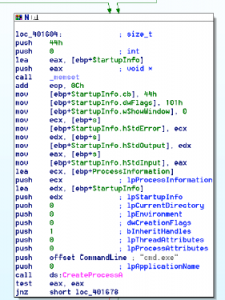
#5. Automate dis-assemblers

The Dis-assemblers can automate the code in a reverse manner and also upgrade its security levels.

#6. File fingerprinting

Always ensure to fingerprint the files so that the value changes can be identified easily and quickly.

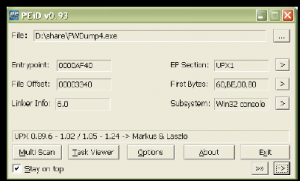
#7. Identify the packed code

Never ignore the packed code existence and try different identifying software to detect it. Completely bifurcate the point and click packers as they lay the path to the intruder to take control of the system.

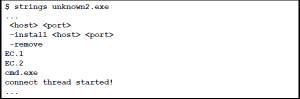
#8. String analysis

Every string must be deeply analyzed to know its purpose function and where it is located in the file.

#9. Safeguarding web search

Be careful with the IP addresses, different domain names, network issues, and email addresses while browsing, and avoid any imprudence with malicious code.

Dynamic malware analysis techniques

#1. Monitoring process and filtration

Process monitoring helps us to find the key attribute information like thread activity, process time, file activity, and registry activity. Filtration plays a vital role in monitoring.

#2. Analyze the network traffic

The next key factor of dynamic analysis is to detect the network traffic and to determine the prospects of it.

#3. Analyzing PE structure

Examine the PE file to identify interesting fields of code.

  • .text: This contains the executable code.
  • .rdata: This section holds read-only globally accessible data.
  • .data: Stores global data accessed through the program.
  • .rsrc: This section stores the resources that are required by the executable.

#4. Debugging

Dynamic linking and debugging always benefit in the early identification of malware and helps to attain protection.

Tips To Choose the right open source tool

Open source tools take to play a major role in defining your project scope and after deployment progress. In fact, the finances come down drastically when you choose to opt for open source tools and technologies instead of paid tools and technologies.

Whether it is a document management system or a development framework for any required business application system, open-source solutions provide you with the best tailor-made infra to design, develop and deploy your needs.

There are many benefits in using the open-source tools and technologies like no need to follow the regular updates and version changes, it happens automatically. All the technical trends are always taken care of. So, it is obvious that the stakeholders always tend towards using the open-source tools and seek a benefit of interest from them.

There are a lot of open-source tools available in the market catering different needs and requirements like from machine learning to web servers, automating the testing script, designing the source file, etc, it is in the hands of the developer to choose the perfect tool for addressing the requirements in order to prevent the future hitches.

In this regard, we would like to shed some interesting factors to consider while choosing your right open-source tool and what the points to remember in selecting one are.

#1. Check the initial requirements

  • Is the software a licensed one?
  • Is it easy to install?
  • Is it easy to run?
  • Are the issues and PR raised?
  • Is the contributing doc provided?
  • Does it have a docker file?
  • Does it support tests?
  • Does it have badges?

#2. Check for the license type

Open source tools come with different license types and different potential values. One should never miss checking the license type before opting for the tool of his choice. Permissive license is the best option to utilize your complete freedom in writing or developing the code. So, it is always advisable to choose the permissive license type open-source tools and technologies.

Also, there is also a copyleft open-source type of license, which comes with restricted permissions. So depending on the scope of your source code, choose the license type here and always be ever ready to counter the legal issues.

#3. Security assessment

Open source tools and technologies are always prone to high threats and exploitations easily when compared with others…so, it is advisable to stay alert in identifying the different behavior and only trust those tools which have a well-supported team in fixing the vulnerable patches as soon as they are unveiled. CVSS V3 is a scoring system, which assesses the severity of open source community and provides the score of vulnerability rate so that we can make a decision based on the given information in choosing the right tool.

#4. Support

There are two major roles that play a vital role in supporting open-source platforms. One is based on individual interests, who are readily offering their skill set to improve the efficiency of the tool and the others, known as dedicated contributors, provide their services for free and market their expertise indirectly by offering a paid long term support for the beginners, to implement the open-source tools and technologies in a better way.

#5. Policy

Always have an eye regarding the policy factors of any open-source tools and technologies. It plays a vital role in enhancing the standardization of tools usage and implementation of related technologies. Seek the opinion of direct dependency roles of open source tools, in order to understand the scalability of stakeholder scope while coding, designing and deploying various projects.

#6. Ease of documentation

The documentation of the open-source tool must be easy to understand and readily accessible to everyone. The contributions of the community by both the freebase users and committed users help to maintain the stability of the platform and also reflect the recent changes in the document without fail. So, take care of choosing the tool, who is highly active in updating their documentation on a regular basis.

#7. End-user profile

Cross-check on the list of end-users who are actually implementing the particular open-source tool which you want to choose. The list can directly reveal the potential and the technical capability of the tool if the renowned company names are on the list and hence you can go ahead with a positive sign without doubting the security and endurance of the tool.

#8. Activities of community

An open-source community always has an active community where both the contributors and end-users play a key role in the activity sharing to enhance the forums, blogs, and messaging applications to share their experiences regarding the usage of the software as well as the issues rose at the same time. Check for such a community where the queries are addressed within in a short span of time with high priority and the security patches are fixed in a timely manner.

Conclusion


Always check twice and rethink before choosing any of the available open-source tools. It is obvious that they are so attractive to see because of their benefits and the low cost of investment and maintenance. But, one should be careful choosing the best fit in addressing their requirements by considering all the above factors.

An initial check on these five factors helps to establish a standard working model in the future, without the unexpected hassles and worrisome issues that can bring down your working performance.